

Specialised translation for technical, legal, medical, chemical, business and financial documents
- Specialist translators for technology, law, medicine, chemistry, business and finance
- ISO 17100 and ISO 9001, audited by DEKRA
- Dual control principle: the translator never revises their own text
- Native speakers of the target language with a proven subject qualification
Specialised translation means translating a text whose accuracy has legal, technical or commercial consequences, by a translator who knows the subject. It differs from general translation in procedure, not vocabulary: ISO 17100 requires a second qualified specialist to revise every translation. Eurolingua is certified to ISO 17100 and ISO 9001 by DEKRA, with certificates valid until 2 January 2028 (ISO 17100) and 7 March 2027 (ISO 9001).
Key facts: subject areas, certification, experience, quoteCollapse
| Criterion | Details |
|---|---|
| Subject areas | Technology, law, medicine, chemistry, business, finance, science, software localisation, website localisation |
| Certification | ISO 17100:2015 and ISO 9001:2015, both audited by DEKRA |
| Terminology | A terminology database for each client, growing with every repeat order |
| Certified translations | On request, by authorised translators |
| Experience | Translating since 1976 |
| Location | Dortmund, Germany |
| Quote | Without obligation, usually on the same working day |
Subject areas at a glance
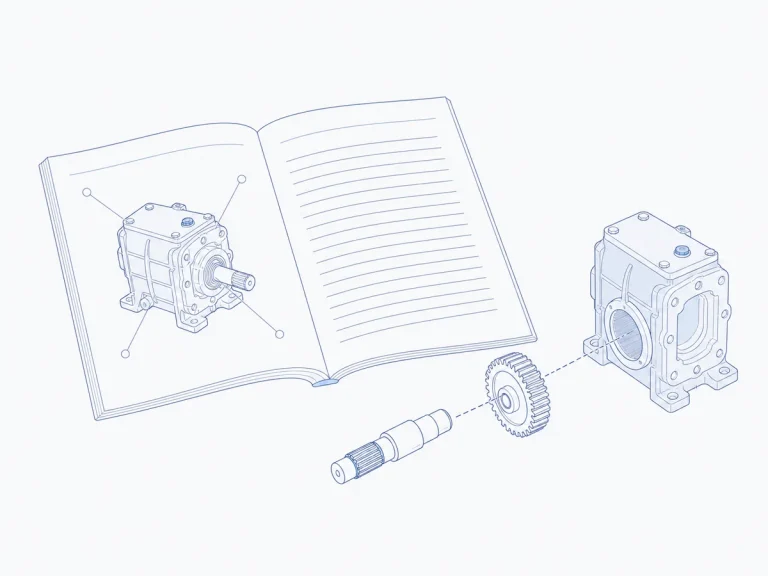
Technical translations
Operating manuals, machine documentation, patent specifications, Machinery Regulation (EU) 2023/1230
Legal translations
Contracts, court judgments, notarial deeds, powers of attorney
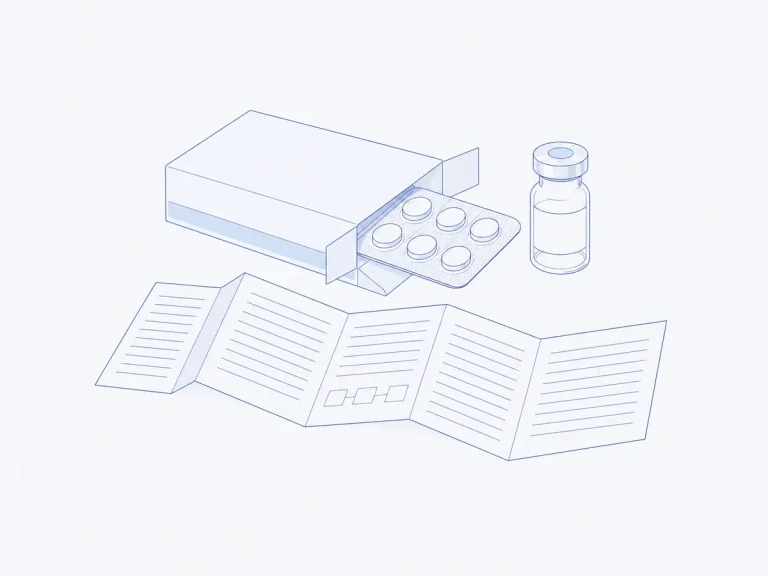
Medical translations
Clinical studies, regulatory submissions, instructions for use
Chemical translations
Safety data sheets, REACH documentation, hazard labelling
Business translations
Quotations, presentations, tenders, marketing, correspondence

Financial translations
Annual financial statements, annual reports, ESEF reports, sustainability reports

Scientific translations
Publications, dissertations, grant applications
Software localisation
User interfaces, error messages, help texts, device controls, resource files (strings.xml, XLIFF, .resx)
Website localisation
Websites and online shops, product texts, target-market search terms, hreflang, legal texts, transactional emails
Four details are enough for a quote: the file or a sample, the target language, the country where the text will be used and its purpose.
What an error would cost decides the subject area
A text belongs to the subject area set by the consequence of an error, not by the client’s industry. If a mistake could cause personal injury, the text is technical. If it could make a contract unenforceable, it is legal. If it could endanger health or delay a regulatory approval, it is medical.
| If an error leads to | Typical documents | Subject area |
|---|---|---|
| Personal injury, product liability | Operating manuals, safety instructions, warnings, patent specifications | Technology |
| An unenforceable contract, a lost case | Contracts with jurisdiction and liability clauses, court judgments, notarial deeds, powers of attorney, terms and conditions | Legal |
| Harm to health, a delayed approval | Clinical trials, approval dossiers, patient information leaflets, doctors’ letters | Medical |
| A hazardous substance incident, blocked market access | Safety data sheets, REACH documentation, hazardous substance labelling | Chemistry |
| Investors making the wrong decision | Annual financial statements, annual reports, prospectuses, sustainability reports | Finance |
| A lost deal, reputational damage | Quotations, tenders, framework and supply contracts, presentations, marketing and product copy | Business |
| Operating errors, support effort in the target market | User interfaces, error messages, device controls, resource files (strings.xml, XLIFF, .resx) | Software localisation |
| Abandoned purchases, customers in the target market who cannot find the shop, ineffective mandatory disclosures | Online shops, hreflang, transactional emails, the site’s legal texts | Website localisation |
| A rejected publication | Journal articles, doctoral theses, grant applications, conference papers | Science |
Sorting by industry misleads, because one engineering firm needs contracts, financial statements and operating manuals at the same time. Where a document fits several rows, the heaviest consequence decides: an operating manual with a contractual annex is handled as a technical text, because personal injury weighs more than a gap in the contract. A machine control with an operator interface is two jobs: the manual goes to technology, the display texts to software localisation, where character lengths and firmware language tables limit the wording.
One route from enquiry to delivery for every subject
The ISO 9001 process documentation makes this route binding, and the DEKRA audit checks it.
- Enquiry
You send the file or a sample and say where the translation will be submitted or used.
- Quote
A quote by standard line with a delivery date. Nothing further is needed from you.
- Translation
By a native speaker of the target language qualified in the subject area. You supply terminology lists or earlier translations, if you have them.
- Revision and delivery
A second specialist checks the translation against the source, then it is delivered in the agreed format. If you need it certified by an authorised translator, say whether on paper or electronically.
Subject, languages and complexity set the price
Billing is per standard line (Normzeile) of 50 to 55 characters including spaces. Subject area, language combination, complexity and research effort, the quality of the source document (scan or copy versus an editable file) and the share of segments already in the translation memory set the price. With recurring documents each follow-up job costs less. Quotes are without obligation.
ISO 17100 requires a second specialist to revise
What makes the standard work is that the reviser is never the translator: the dual control principle. What it does not guarantee is subject knowledge. A provider certified to the standard may still put a translator on a text outside their field, as long as the formal qualification fits, which is why the assignment by consequence of error counts for more than the seal.
| Standard | What it governs | What it means for your job |
|---|---|---|
| ISO 17100 | Translator qualification, mandatory revision, terminology handling, project documentation | One person translates your text and a second checks it against the source |
| ISO 9001 | The management system: defined processes, documented evidence, complaint handling | Every job is documented, so a complaint can be traced back to who did what and when |
ISO 17100:2015
Certified by DEKRA, valid from 3 January 2025 to 2 January 2028.
ISO 9001:2015
Certified by DEKRA, valid from 4 June 2024 to 7 March 2027.
Machine translation suits some texts, not all
Machine systems now handle general-language texts between the major European languages reasonably well. They fail reliably where meaning depends on context the text does not carry: terms with several valid equivalents, legal concepts with no counterpart in the target legal system, number and name fields treated as running text.
- Yes, for an internal message to a known recipient. No outside audience, and you can always ask what was meant.
- Yes, for a first understanding of a foreign-language document. Good for sifting, not for working from.
- With post-editing, for a product description in an online shop. Errors there cost sales, not liability.
- No, for everything in the subject-area table. An error triggers liability, a delayed approval or an unenforceable contract, and no machine system takes responsibility for that.
For a one-off text the machine is cheaper, and no calculation makes that go away. With recurring documents the picture turns: segments already translated are reused from the translation memory, so each follow-up job costs less. The machine starts from zero every time and words the same thing differently on every run.
Terminology work pays off on later orders
A terminology database rarely shows its value on the first job, where it appears as extra effort. The benefit arrives from the third job on the same body of documents. The first job collects the terms and agrees them with you. On the second the database applies but holds few entries. Once it covers your core vocabulary, three effects show:
- Terms are consistent across all your documents, which separate orders cannot achieve.
- Queries about which term to use fall away, because the decision is on record.
- Recurring segments are not charged as new text.
So if you can foresee several documents on the same matter, say so with the first one. Order three separately and you pay for collecting the terminology three times. How terminology drifts apart across document generations is shown under technical translations.
Questions about specialised texts and certification
What makes a specialist translator different from a general translator?
Demonstrated subject knowledge on top of the language qualification, and a process with mandatory revision. A general translator renders accurately what the text says. A specialist also recognises when a term has no counterpart in the target country’s body of standards.
What does 'legally sound translation' mean?
The phrase is not a legal term. It bundles factual accuracy, for which ISO 17100 with its mandatory revision is the testable procedure, and formal recognition by an authority or court, which requires certification by an authorised translator. A contract usually needs the first, a document for a German registry office (Standesamt) the second, a court document often both. Which form your case needs is settled before the quote.
What determines the price of a specialised translation?
Billing is per standard line (Normzeile) of 50 to 55 characters including spaces. Subject area, language combination, complexity and research effort, the quality of the source document (scan or copy versus an editable file) and the share of segments already in the translation memory set the price.
How long does a specialised translation take?
Urgent deadlines are agreed with the quote, but not in less time than the mandatory revision needs. The delivery date is agreed with the quote, after the source text has been reviewed.
Do my documents stay confidential?
Yes. All staff and external specialist translators are bound to confidentiality, and processing is carried out under the EU General Data Protection Regulation (GDPR). For particularly sensitive projects, a separate non-disclosure agreement is possible.
Which languages we cover for specialised texts is shown on our page languages we translate.
If the subject area is not obvious, describe what a mistranslated sentence would cause: a warning in a manual that is misread, a clause that does not hold up in court, a figure that misleads an investor. That one line decides which specialist translates the text.
Send the file or a sample and name the subject area and target language, and you will usually have a quote on the same working day.
Related services and languages
Two neighbouring services are sorted by a different question than the subject area. Whether a translation must be certified depends on who has to accept it, not on the field, and interpreting deals with the spoken word, from negotiations to conferences. For common languages we work with experienced specialist translators in each subject area; for any other combination we usually let you know about availability by the next working day. For specialised texts the target country always matters alongside the language, because standards and legal terms are country-specific.